
How Does AI character chat Work For Everyday Users?
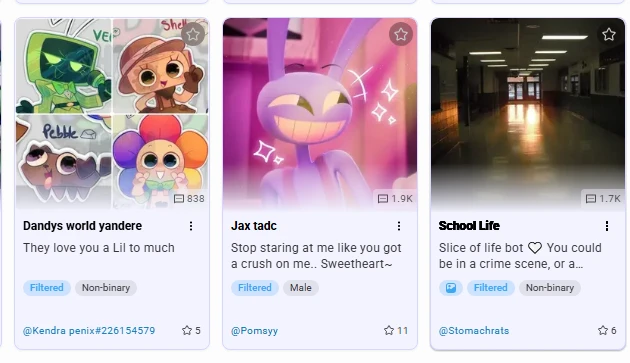
AI character chat allows everyday users to communicate with digital characters that can respond in natural language, maintain conversation context, and imitate specific personalities. These systems rely on large language models (LLMs), which contain billions of parameters trained on large-scale text datasets. Since 2022, generative AI adoption has accelerated rapidly, with conversational AI becoming one of the fastest-growing consumer AI applications. The user experience depends on four technologies: language generation, character design, memory systems, and safety controls. The difference between AI character chat and traditional chatbots is that users interact with a personality-driven system instead of a fixed question-answer tool.
AI character chat works by converting user messages into machine-readable tokens and processing them through a large language model. The model does not retrieve a fixed sentence from a database; it predicts suitable responses based on language patterns learned during training.
Modern LLMs can contain hundreds of millions to trillions of parameters, allowing them to analyze relationships between words, context, and conversation history. Research published in 2024 noted that LLM-based conversational systems depend on large-scale training data and advanced neural architectures to generate new responses rather than simple scripted replies.
A typical AI character response includes several steps:
| Process | What happens |
|---|---|
| Message analysis | The system identifies the user's request and conversation meaning |
| Context processing | Previous messages and stored preferences are reviewed |
| Character adjustment | Personality settings influence tone and style |
| Text generation | The AI creates a response word by word |
| Safety review | Filters check whether the response follows platform rules |
For everyday users, this process happens within seconds. A person may only see a chat window, but the system is combining language prediction, user information retrieval, and character instructions before producing the final message.
The personality design determines how an AI character behaves during conversations. Developers usually define identity information, communication style, interests, and behavioral boundaries through prompts or model adjustments.
For example, an AI language tutor may be designed to correct grammar, explain vocabulary, and ask practice questions. A fictional character may use specific expressions, preferences, and background details to create a consistent interaction style.
“AI characters are not created by writing every possible reply. They are created by giving the model a structured identity and allowing it to generate responses within that framework.”
Character consistency has become an important part of user experience. A 2023 research project on character-based dialogue models showed that customized attributes such as identity, interests, and interaction patterns can improve perceived human-like conversation quality.
Another technology that changes AI character chat is memory. Earlier chatbot systems usually treated every conversation independently. After users closed the session, the chatbot often lost previous information.
Modern platforms increasingly use memory systems that store selected details, including:
-
preferred conversation style;
-
frequently discussed topics;
-
learning goals;
-
creative projects;
-
user preferences.
When a user returns, the AI can retrieve relevant information and include it in the new conversation. This creates a feeling of continuity because the system does not behave like a completely new chatbot every time.
Memory systems usually combine databases with retrieval technology. Instead of sending thousands of previous messages to the language model, the platform selects useful information and adds it to the current conversation.
This approach improves efficiency because large language models have limits on how much information they can process at once. By 2024, many commercial AI systems had expanded their context windows from a few thousand tokens to hundreds of thousands of tokens, allowing longer conversations and more detailed interactions.
The technology behind AI character chat also explains why these systems feel different from traditional digital assistants. Traditional assistants are usually designed around specific tasks, while AI characters focus on flexible conversation.
| Traditional assistant | AI character chat |
|---|---|
| Voice commands and commands | Natural conversations |
| Limited response patterns | Generated responses |
| Task completion | Interaction and discussion |
| Minimal personality | Character-based style |
| Short sessions | Longer conversations |
This difference has created new usage scenarios. People use AI characters for entertainment, language practice, creative writing, interview preparation, brainstorming, and casual conversations.
Some platforms allow users to create their own characters by defining names, personalities, backgrounds, and speaking styles. Character.AI, for example, allows users to design customized chatbot personalities through descriptions and example conversations.
AI character chat has also expanded into specialized categories. Some users prefer educational characters, while others choose creative or relationship-oriented conversations. Platforms such as AI sex chat provide adult-oriented AI character interactions with customized conversational experiences.
The growth of AI character chat is connected to improvements in computing infrastructure. In 2017, transformer models introduced a more efficient way to process language relationships. By 2022, large generative models became available to general users, changing public expectations about digital conversations.
Market data also shows strong growth in conversational AI. The global conversational AI market was estimated at about $14.3 billion in 2025 and is projected to continue expanding through the early 2030s.
The increase in adoption comes from several factors:
| Factor | Influence |
|---|---|
| Better language models | More natural responses |
| Lower computing costs | Wider consumer access |
| Mobile applications | Easier daily use |
| Memory features | More personalized interaction |
| Voice technology | More human-like communication |
Voice interaction is becoming another development direction. Modern AI systems increasingly combine text, speech recognition, and voice generation. Recent industry reports describe a growing shift toward spoken AI interaction, with major technology companies investing heavily in voice-based assistants.
However, AI character chat still has technical limits. These systems generate likely responses based on learned patterns, but they do not have personal experiences or real emotions.
When an AI character says “I understand,” it is producing language that matches the conversation context. It does not experience understanding in the human sense.
Accuracy is another issue. AI characters may produce incorrect information because language models focus on generating plausible text rather than automatically verifying every statement.
A 2024 study examining generative chatbot interviews with 200 participants found that AI-generated conversations could influence memory responses under certain conditions, showing that users should evaluate AI-generated information carefully.
Privacy is also an important consideration. AI character platforms process conversation data, and users should understand how information is stored and used. Personal details, financial information, and private records should not be shared casually with online AI services.
Safety systems have become more common as AI character platforms grow. Many services now include content filters, age-related controls, and conversation monitoring features. For example, major character chatbot platforms have introduced additional safety tools after concerns about inappropriate interactions and younger users.
Future AI character systems are expected to become more interactive through multimodal technology. Instead of only typing messages, users may communicate through voice, images, and virtual environments.
Possible future features include:
-
real-time voice conversations;
-
personalized visual avatars;
-
long-term preference memory;
-
AI-assisted learning partners;
-
creative collaboration tools.
The development path shows a move from simple chat interfaces toward personalized digital interaction systems. The technology behind AI character chat combines large language models, memory retrieval, personality design, and safety mechanisms to create conversations that feel more natural than older software.
For everyday users, AI character chat appears simple: type a message and receive a reply. Behind that experience is a complex system trained on large datasets, powered by advanced computing, and designed to adapt to different communication needs. As models continue improving, AI characters will likely become a more common part of entertainment, education, and daily digital communication.
Ready to specify How Does AI character chat Work For Everyday Users??
Send drawings or a fixture schedule. A single project coordinator handles your quote, submittals, and RFIs from first contact through closeout.